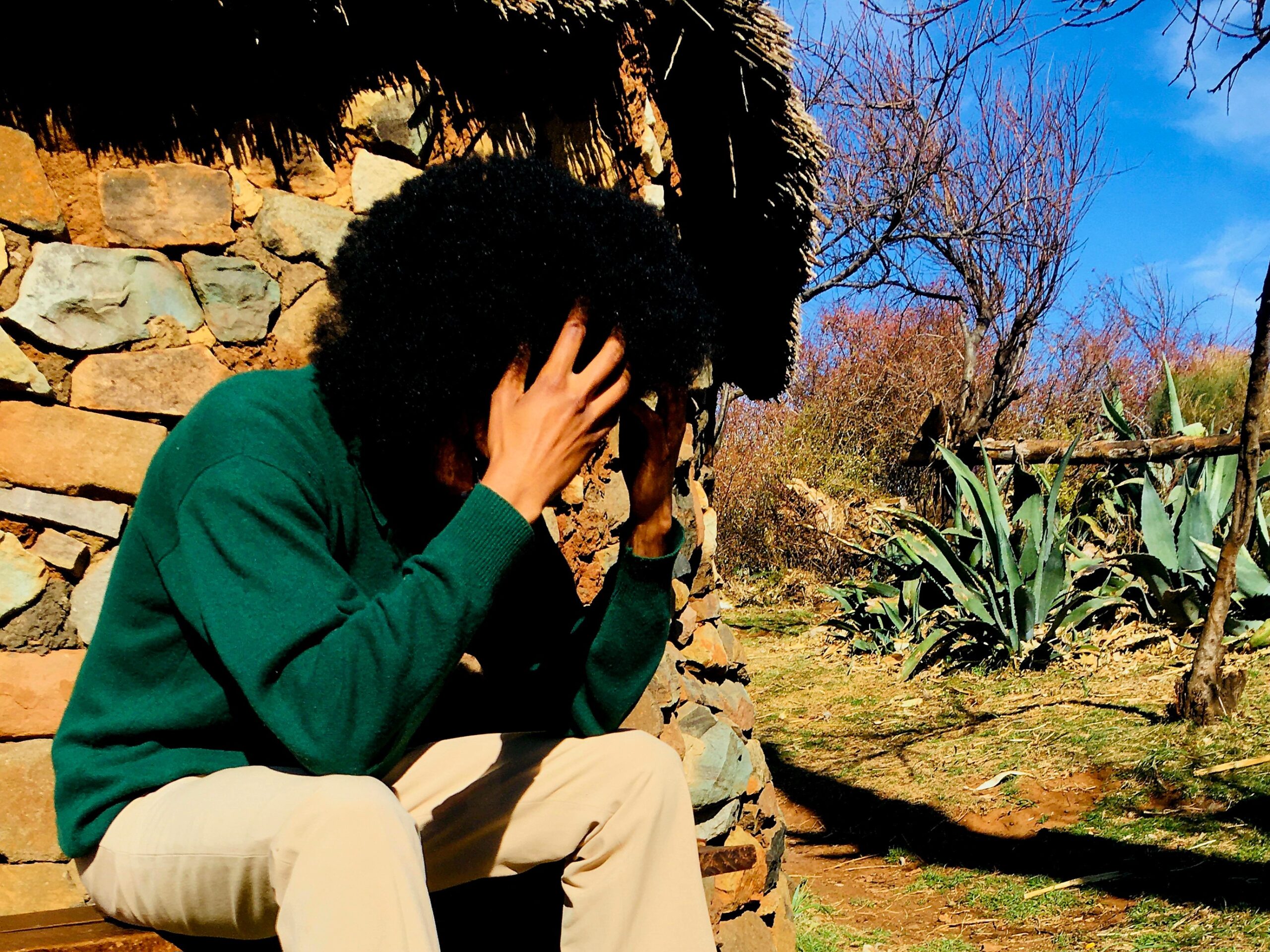
When the Nigerian writer Chimamanda Ngozi Adichie recalls being surprised the first time she was told she was Black, she captures a noiseless but profound truth. She had gone to the United States to study. Until then, she had never thought of herself as Black. She was Nigerian. Igbo. African. The word Black landed not as a self-recognition, but as a label one assigned from the outside.
Her confusion is telling. Was she not Black before America? Or was Blackness something she became only after crossing the Atlantic?
This moment is not unique to Chimamanda. Many Africans who travel or settle outside the continent encounter the same shock: a sudden racial identity that had never previously organised their sense of self. Outside Africa, in Europe, the Americas, and Oceania—Africans are almost universally referred to as Black. Yet on the continent itself, many Africans do not instinctively identify with this label, nor do they experience it as primary. This disconnect raises an important question: why is Black not an African first language?
African vs Black: Two Labels, Two Histories
The words African and Black do not emerge from the same historical or cultural needs. They come from entirely different worlds. African is a lived identity. It is rooted in geography, culture, language, values, memory, ancestry, and shared ways of life. It exists from within the continent. To be African is not to be defined by skin colour, but by belonging, to people, to land, to histories that predate colonial contact.
Black, on the other hand, is a racial category largely constructed outside the continent. It was born in the context of European expansion, slavery, and colonial hierarchy. It did not exist to describe culture; it existed to organise power. Blackness was designed to tell Africans who they were not: not European, not white, not fully human in the eyes of the empire.
This distinction matters. African identity is internally generated. Blackness, historically, was externally imposed. Singer Tyla does not identify primarily as Black, and this is not because of the color of her skin. She is an African woman of Coloured ethnicity, and her identity is shaped first by cultural heritage, shared values, and lived experiences on the continent.
For Tyla, being African is about belonging to a set of practices and shared ways of life, not about fitting into a racial hierarchy created by outsiders. She situates herself within her ethnicity and cultural heritage, emphasizing that Africanness is lived, not labeled.
Identity on the Continent: Lineage Before Colour
Within Africa, people rarely introduce themselves through race. Identity is shaped first by ethnicity, nation, language, and lineage. One is Yoruba, Mosotho, Xhosa, Ndebele, Ugandan, Amhara, Oromo, Igbo, or Shona before anything else. These identities carry stories, customs, belief systems, food, music, kinship structures, and moral frameworks. Community is the primary organising principle, not race.
An African will classify others by nationality or region—American, Australian, German, Chinese—not by colour. Just as an Australian is not primarily referred to as white, Africans do not see themselves primarily as Black. Skin colour does not perform the same social or political function on the continent as it does in societies structured by racial hierarchy. In this sense, race is not absent in Africa, but it is not central.
Skin Colour Without Politics

Having dark skin in Africa is neither radical nor remarkable. It is not a political statement. It is not an organising hierarchy. It simply is what it is. This is perhaps one of the most misunderstood aspects of African life by those viewing it through Western racial frameworks. In many African contexts, skin tone does not determine access to humanity, citizenship, or legitimacy. Differences certainly exist—ethnic, linguistic, class-based, regional, but they are not organised primarily around colour. There is no need to explain dark skin in Africa. There is no need to justify it. There is no constant negotiation of its meaning. It is African.
Geography, Climate, and Diversity
Africa is not a monolith, and neither are African bodies. Skin tones vary widely across the continent, influenced by geography, climate, migration, and history. Southern African populations in countries such as Lesotho, South Africa, Botswana, and Namibia often have lighter or more varied tones compared to regions closer to the equator. In East and West Africa—particularly places like South Sudan, some of the darkest skin tones in the world are found, shaped by generations of adaptation to intense sun, heat, and rainfall.
These differences are understood environmentally, not hierarchically. Climate explains variation, not worth. Africans do not see these differences as racial categories. They are facts of nature, not social ranking systems.
South Africa: A Partial Exception

South Africa presents a complex case. Due to its unique and violent history of institutionalised racism under apartheid, South Africans became intimately familiar with racial terminology, including Black. However, even here, the term was not self-generated. It was imposed by a system designed to control, separate, and dehumanise.
Blackness in South Africa became politicised as a response—a reclaimed term of resistance, solidarity, and survival. But even then, it was learned through oppression, not inherited through culture. This reinforces the point: Blackness enters African consciousness through colonial and racial violence, not indigenous self-definition.
Blackness in the Diaspora: A Necessary Invention
Outside the continent, Blackness took on a different role. In the Americas and the Caribbean, enslaved Africans were violently stripped of ethnic identities. The histories of Yoruba, Igbo, Akan, and Wolof were erased or fragmented. In their place, Blackness emerged as a collective identity, one forged through shared suffering, resistance, and survival.
In this context, Blackness was not merely imposed; it was also reclaimed. It became a political tool, a cultural bond, a way to build solidarity in societies organised around white supremacy. This is why Blackness holds deep meaning in the diaspora. It was necessary. It saved lives. It created a community where none was allowed to exist. But necessity does not mean origin.
The Question of Naming: African American and the Politics of Race
One of the most revealing inconsistencies in Western racial logic is naming. Americans of African descent are labelled African American, regardless of how distant their ancestral connection to Africa may be. Yet Americans of British descent are not commonly referred to as Anglo-American, nor those with French lineage as French American. White Americans are simply American.
Similarly, white people living in Africa, many of whom descend from European settlers, are not described as Dutch-African or Anglo-African. Their race disappears into nationality. Why, then, does African ancestry remain permanently racialised? The answer lies in power. Race is used to mark difference where difference is politically useful. Blackness becomes a permanent qualifier, while whiteness remains invisible, unmarked, and universal. This is not accidental. It is structural. It is a system.
“African American” as a Cultural Exposure

People like Charlize Theron are far more accurately described as African American than many people who are routinely given that label. Not because of race, but because of lived exposure. Charlize was born and raised in South Africa, shaped by African geography, language, and social realities, and later lived, worked, and formed her adult life in the United States. Her identity is genuinely informed by both African and American cultures, ways of life, and systems of meaning. In this sense, an African American should describe a cultural condition, not a racial assumption.
Being African American, in its most honest definition, would mean having experienced Africa as a place, its rhythms, social structures, histories, and contradictions—and America as another. It would mean navigating both worlds not symbolically, but materially: through schooling, daily life, language, and social interaction. By this definition, Charlize Theron qualifies more clearly than many Americans of African descent who may have never set foot on the continent, do not speak an African language, and have no direct engagement with African societies beyond ancestry.
This is not to deny the deep trauma and historical displacement of the African diaspora. That loss is real and devastating. But ancestry alone does not equal cultural fluency, just as genetics do not automatically confer belonging. Africa is not an abstract origin story; it is a living, changing place with specific ways of being. To claim it meaningfully requires exposure, participation, and lived experience.
The discomfort this idea produces reveals how racial thinking continues to dominate conversations about identity. In the American imagination, Africa is often reduced to Blackness, and Blackness is treated as sufficient proof of Africanness. Yet this logic would never be applied elsewhere. No one assumes cultural Irishness without exposure to Ireland, or Frenchness without engagement with French life. Only Africa is expected to exist as a racial memory rather than a lived reality.
Charlize Theron’s example exposes this contradiction. Her Africanness is questioned because she is white, despite her upbringing on the continent. Meanwhile, Africanness is granted to others solely based on race, despite the absence of cultural contact. This inversion shows how deeply race has replaced geography and culture in Western classification systems.
Africa, however, does not operate this way. Africanness is not inherited through skin colour; it is shaped through place, practice, and participation. It is learned by living, not only assumed by ancestral connection. It is a way of life, not skin and featured costumes. In that sense, the term African American has been misused. It has become a racial placeholder rather than a cultural description.
Why Africans Still Resist the Label
Africans do not reject Blackness out of ignorance or denial. They resist it because it does not fully describe their lived reality. It compresses vast cultural complexity into a single colour. It replaces history with hierarchy. It speaks more about Europe and America than it does about Africa.
To say I am African is to say: I belong to a place. I inherit cultures older than race. My identity is not a reaction, but an origin. Blackness may be embraced in moments of global solidarity, political struggle, or shared resistance. But it is rarely the starting point.
When Race Claims Africa
There have been moments, both online and in real life, where Americans of African descent have told white Africans, or lighter-skinned Africans, “I’m more African than you.” These encounters are jarring, not only because of what is said, but because of the logic behind them. The claim almost always comes from a place of race, not culture, history, or lived experience of the continent.
To say “more African” on the basis of Blackness alone is to collapse Africa into a racial idea rather than a geographic, cultural, and civilisational reality. It assumes that Africanness is something carried in the skin, rather than something practised, inherited, and lived. This is not an African way of understanding belonging; it is a diasporic and Western racial framework projected back onto the continent.
A white African, whether South African, Zimbabwean, Namibian, Kenyan, or Algerian, may speak an African language, participate in African customs, understand local histories, and have generations buried in African soil. A lighter-skinned African may carry lineage, memory, and cultural knowledge that cannot be accessed through ancestry tests or symbolic affiliation. Yet in racial discourse shaped by American history, these realities are often dismissed because they do not fit neatly into Black–white binaries.
This tension reveals a deeper misunderstanding: Africa is not a race, and Africanness is not a reward for suffering racism elsewhere. While the trauma of slavery and racial oppression in the diaspora is real and profound, it does not grant authority over a continent’s identity. Africa does not operate on a hierarchy of pigmentation, nor does it measure belonging by proximity to Blackness as defined in the West.
What is often at play in these confrontations is displacement. Blackness, forged as a necessary and powerful identity in the diaspora, is being used to fill a cultural absence left by slavery. The loss of ethnic specificity, language, and place. In that absence, Africa becomes imagined as a symbolic homeland rather than a lived one. But symbolism cannot override reality.
Africans did not become African through race. They became African through place, people, practice, and continuity. To insist otherwise is to repeat the very reduction that colonialism began: turning Africa into an idea instead of a world.
Blackness arrived late to Africa. African identity did not begin with race, and it does not end with it. Before Black, there were names. Nations. Lineages. Songs. Languages. Landscapes. Ways of living. To understand Africa only through Blackness is to misunderstand Africa entirely. African is not a colour. It is a world.
Comments are closed