It is exactly 15:12 in South Africa. The sun is bright, the sky clear, and the wind restless enough to suggest that winter may arrive early this year. My window faces a park and a row of modest one-storey houses painted in soft colours that fade slightly under the afternoon light. Across from me lives a household with three cats who appear to have negotiated ownership of the entire street.
One of them is ginger and spends most afternoons stretched across the bonnet of a grey Mercedes-Benz GLC, asleep as if the car were built for that purpose alone. Another cat is black with white “socks” that rise unusually high on the back legs, almost like stockings, while the front paws look more like gloves. Her name, I have been told, is Jazmine. She prefers rooftops to ground level and often watches the street with the composure of someone supervising an operation.
The third is a Siamese with pale blue eyes. He lies in the driveway with stubborn calm, forcing cars to slow down until someone steps out or hoots. I spend more time observing these cats than I am willing to admit.
Inside my studio, my own cat Chloe is asleep beside my chair. When she wakes, the calm dissolves into negotiation, because she believes the keyboard exists primarily as a place for her to walk or sit, watching the cursor move up and down.
The room itself has slowly become a collection of things that explain how I arrived here. On the white wall hangs Naomi Campbell on the cover of Vogue. Next to it is the first cover of The New Yorker. Nearby is a photograph of a design by Thebe Magugu—a woman standing in front of a taxi wearing a two-piece short suit that carries the unmistakable energy of township fashion culture.
My grandmother is there too. She sits with her white doek in a garden in a photograph I took in 2024, her hands folded, looking like they had been working on farm-related tasks before the picture, the confidence of someone who has lived a full life close to the land. On the desk rests a photograph of Chinua Achebe in shorts, exposing hair on his legs, holding two copies of Things Fall Apart. His posture is relaxed, almost amused, as if aware that the book will travel further than he ever expected. Beside him is Chimamanda Ngozi Adichie, her hand resting against her cheek in a portrait that feels both thoughtful and directed.
Above them sits Anna Wintour behind her desk, without the sunglasses she is famous for. How lucky am I to have Anna remove her glasses for me? On another wall is the fictional editor Miranda Priestly, captured mid-glance as if she has just looked up from the newspaper to judge the entire room. There is also David Remnick, editor of The New Yorker, leaning slightly into his hand in the same way as Chimamanda, but on his left. Nearby is James Baldwin, writing from the edge of a bed while looking directly at the camera. In black and white, the former British Vogue editor Edward Enninful watches the room with more seriousness. These faces surround the space where I write.
The shelves on the side are crowded with books about African insects, wildlife, dictionaries, novels, essays, and magazines. A pen given to me by a highly wise and intelligent woman named Anja one Christmas, is glued to the wall like a sculpture. This room is where many of my thoughts about African culture begin.
In May 2025, the Met Gala created a moment that many African designers had long hoped for. The theme celebrated Black dandyism and style to remember, honour and celebrate the history of black couture in America. Designers from across the continent appeared at the headquarters of fashion stages in New York City.


Thebe Magugu dressed Aurora James. Nigerian designers appeared in striking colours. Ugo Mozie dressed icons such as Diana Ross. For a moment, it felt like African haute culture had arrived at the centre of global fashion. But moments like this are fragile. A single evening cannot sustain an industry. Fashion houses are not built through one red carpet or one headline. They grow through consistent support—through buyers, institutions, critics, and audiences who believe in the work long before the rest of the world notices.
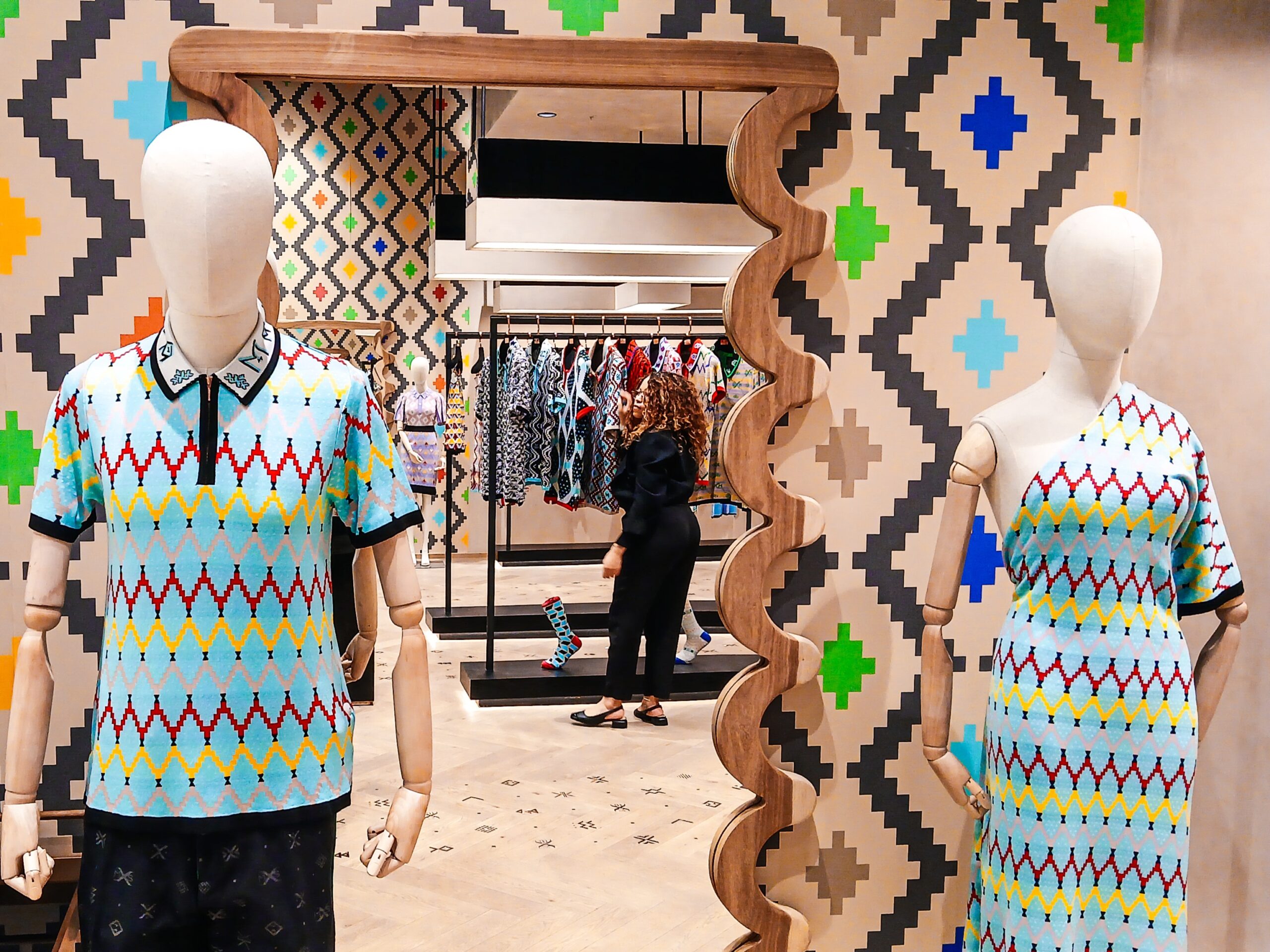
This is where an obstacle appears in African creative life. Tribalism. In theory, tribal identity can be something beautiful. It can represent language, ancestry, and belonging. It can remind us of where our families began. But when it becomes the main structure through which we support art, something else happens. As a Mosotho, I am often expected to admire designers connected to Basotho identity and the Basotho-inspired house. A Xhosa audience may naturally gravitate toward Xhosa designers such as Laduma Ngxokolo of Maxhosa.
This instinct is understandable, yet it creates boundaries. In Europe and the United States, people often wear what they love, regardless of regional identity. A designer from Milan may be worn enthusiastically in Paris; a New York brand can thrive in Los Angeles. The admiration moves freely. In parts of Africa, the movement is slower. Cultural allegiance sometimes decides who receives attention first.
The result is subtle but powerful: instead of a continental fashion ecosystem, we create small territories of taste. And in the absence of collective support, many consumers turn toward global luxury brands. A handbag from Louis Vuitton purchased at Sandton City carries no tribal identity. It is neutral, internationally recognised, and socially uncomplicated. The irony is difficult to ignore. An African designer may struggle to gain attention from fellow Africans while European brands move effortlessly through the same markets.

Tribal identity then shifts from cultural pride to something closer to rivalry. In its most extreme form, it becomes a contest of influence—who is regarded as powerful, who receives opportunities, whose voice is amplified. The pattern appears not only in fashion but also in music, television, and film. Sometimes it feels less like support and more like competition disguised as loyalty. Yet it does not have to remain this way. There is nothing wrong with knowing one’s tribe, language, or lineage. But perhaps those identities should follow something larger.
It should be possible to celebrate being Venda, Xhosa, Sotho, Yoruba, or Igbo while recognising that these identities exist within a broader African cultural landscape. One could wear a Basotho-inspired coat today and admire a Nigerian couture gown next week. One could support a Ghanaian textile house and still remain proud of one’s own heritage. Identity need not function as a border. The Rapper A.K.A. (Kiernan Jarryd Forbes) mastered this. He celebrated Africa as a whole.
From my studio window, the ginger cat is still asleep on the Mercedes, untroubled by the questions occupying my mind. The Siamese has moved slightly, though not enough to clear the driveway. Inside, Chloe has woken up and is preparing to reclaim the keyboard. The room remains quiet except for the sound of the wind outside.
In moments like this, I wonder whether African culture might grow differently if we began to see ourselves first not as fragments of tribes, but as participants in a shared creative inheritance. Perhaps then our designers, writers, and artists would not have to wait for international validation before being taken seriously at home. Perhaps then African haute culture would not appear briefly on global stages. It would already be standing firmly on its own.
*Headline Image: Maxhoza Store, Sandton
Comments are closed