I sometimes think of myself as cruel. I do not think of the dead as often as I would have appreciated. Not in the way grief is usually carried, not in the steady, ritual return to their names and faces. This absence of constant remembrance feels, at times, like cruelty. As though love should prove itself through persistence, through repetition, through the refusal to relinquish and let the dead rest anywhere but in the foreground of the mind. But that is not how it happens for me.
I think of them occasionally. And when I do, it is specific, almost cinematic. I think of Kananelo Konote, who died at nineteen. I return, not to her death, but to the living architecture of our youth—to the walk back to our high school to ask for references, to the strange seriousness of being young and already negotiating a future. I remember our history teacher fighting for us after we were separated from our old classmates and placed among the so-called notorious students, an experiment in influence, as though goodness could be contagious if arranged correctly in a classroom. Our teacher believed in us with a kind of urgency, as though losing us would invalidate her entire life’s work.
Somehow, the school principal had this ideology that mixing students who were considered brilliant, with leadership qualities and good manners, with those classified as “bad” would influence them. And I was with Kananelo among those selected to regulate and reshape the notorious. These are the memories that remain intact moments of being chosen, being seen, being trusted with something far greater than self. They are not sad memories. They are, in fact, happy ones.
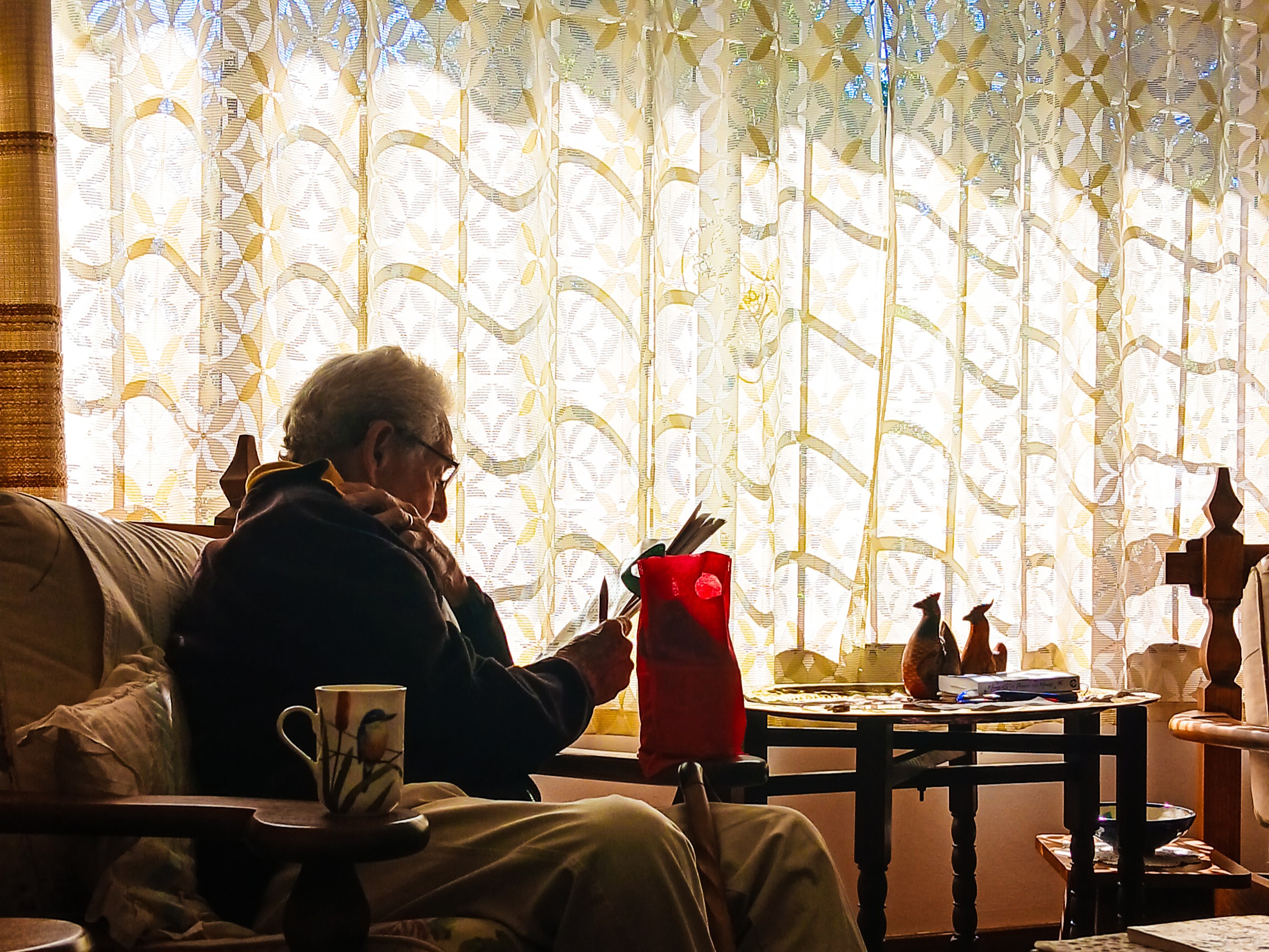
Over a recent weekend in KwaZulu-Natal, I found myself among the elderly, among people who have outlived not just others, but entire eras of themselves. This is where I met a woman who is one hundred and one years old. It felt unreal, as though I were standing in front of time itself. She moved with a grace that unsettled my assumptions about age. Her mind was sharp. Her eyes, I insist, were better than mine as I rely on spectacles all the time and she does not. She rose from the low sofa without assistance, walked without hesitation, and spoke as someone who had made peace with both continuation and ending.

It was there, in that space between youth remembered and age embodied, that a question came to me—uninvited, almost inappropriate in its simplicity: What would my mother say if she could return, just for a minute, and stand in front of me? The answer came quickly. I am sorry I had to leave you so soon. It is a sentence I have heard in different forms from women who are alive, from mothers who speak not of their own deaths, but of the possibility of leaving their children too early. Their fear is not of death itself, but of interruption—of absence imposed too soon, too abruptly, too unfairly.
I do not think of death as evil. I never have. There is something more unsettling to me than death, something that feels like a deeper violation of order. The idea of someone simply vanishing. No body. No ashes. No grave. No place to locate the ending. Even in the most violent and senseless deaths—those claimed by the sea at Skeleton Coast, by war in DRC and Mozambique, by the careless decisions of men in power—there is, at the very least, an acknowledgement of finality. Death, in its own way, marks the moment. It says: ” Here is where it ended. Disappearance offers nothing. Death, then, is not absence. It is a kind of presence, fixed and undeniable. And yet, it does not feel the same each time.
When an old person dies, I understand it as part of a sequence, a rhythm that, while unwelcome, is not unexpected. It feels aligned with something natural, something inevitable. It is, in a way, what is coming for all of us. There is a certain calm in that recognition, an acceptance that life, if allowed to run its course, will arrive at this same conclusion. But when the young die, something in me resists entirely. My body reacts before my mind can form a thought. There is fear, immediate and physical. I cannot absorb it. It feels like a disruption of order, like a sentence cut off mid-phrase. I have come to realise that I live by a simple belief, borrowed from the unspoken logic of mothers: we beat death when it comes in the right order. I was here before you, so I should leave before you. That is the arrangement that makes sense, the one that allows grief to exist without unravelling everything else.
But life does not always honour that arrangement. There is something profoundly wracking about seeing a parent mourn a child. It feels inverted, almost unnatural, as though the world has briefly lost its structure. A child crying for a parent is painful, but it fits within a framework we understand. A parent crying for a child feels like something else entirely—like a mistake that cannot be corrected. Still, life continues, even in these disruptions.
The woman of one hundred and one spoke of her life with a kind of practical clarity. She attributed her longevity to movement, to dancing and skiing well into her seventies, to eating broccoli, to keeping her mind active through crosswords and puzzles. But there was also a moment where her reasoning shifted. She said she stopped skiing after her husband died, not because she could no longer do it, but she feared that if something happened to her, there would be no one to come for her. And of course, I believe in genes; my family members have lived past ninety, most of them. Longevity, then, is not only about the body. It is about who remains to witness it.

Another woman, in her late eighties, spoke of her husband with a longing so intact it seemed untouched by time. She said she wished they could hold hands and be swept away to heaven together. It was in that moment that I understood something about love, that it does not diminish with age, nor does it negotiate with death. It remains, fully formed, even when its object is gone.
Death happens everywhere, every day. It does not discriminate. But what remains uneven is how it is held, how it is absorbed, how it is survived. If there is anything I would wish for children who lose their parents too early, it is not the absence of grief—that is impossible—but the presence of something that can stand against it. For me, that was my grandmother. Her love did not erase death, but it softened its impact. It created a kind of shield, not against loss, against the total collapse that loss can bring.
Perhaps that is why I do not feel death in the way I think I am supposed to. I see it. I understand it. I accept it. But I have been held, in ways that have made its weight more bearable. And maybe that is not cruelty. Maybe it is an inheritance.
Comments are closed