One undeniable fact is that Johannesburg understands cultural immediacy. South Africa’s cultural heartbeat resonates most powerfully in three urban nodes: Cape Town, Johannesburg, and Durban. Each city embodies a distinct cultural logic and creative energy, inviting comparison — yet all three, in their complexity, reveal that cultural capital is a constellation of histories, practices, voices, and living traditions.
To assess “who owns the cultural capital,” we must understand how each city produces and circulates culture — through institutions, festivals, lived practice, storytelling, and social life — and how that cultural production shapes not only local identity but national and continental imaginations.
Cape Town: South Africa’s Rich Tapestry of Culture and Global Creative Branding
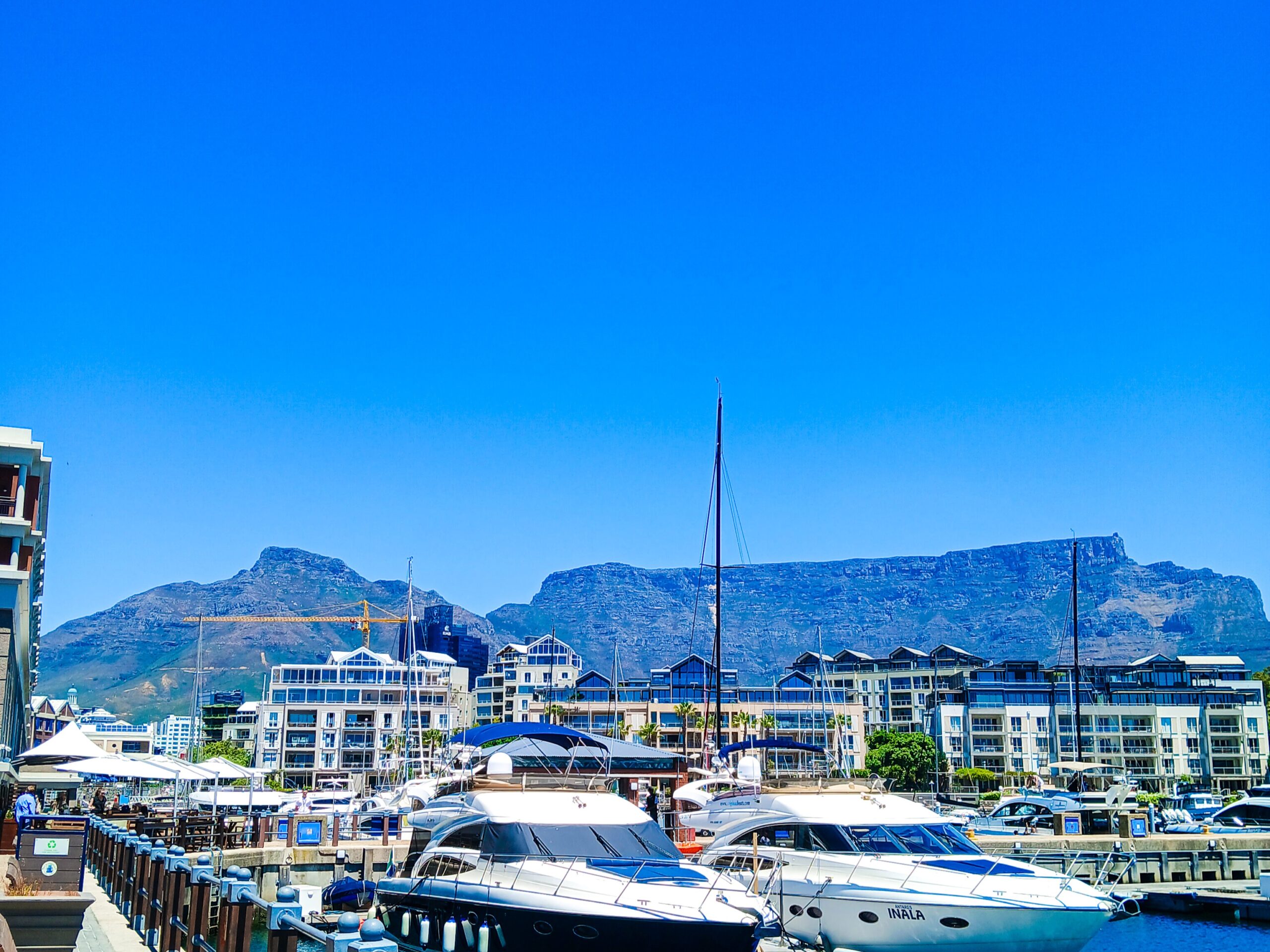
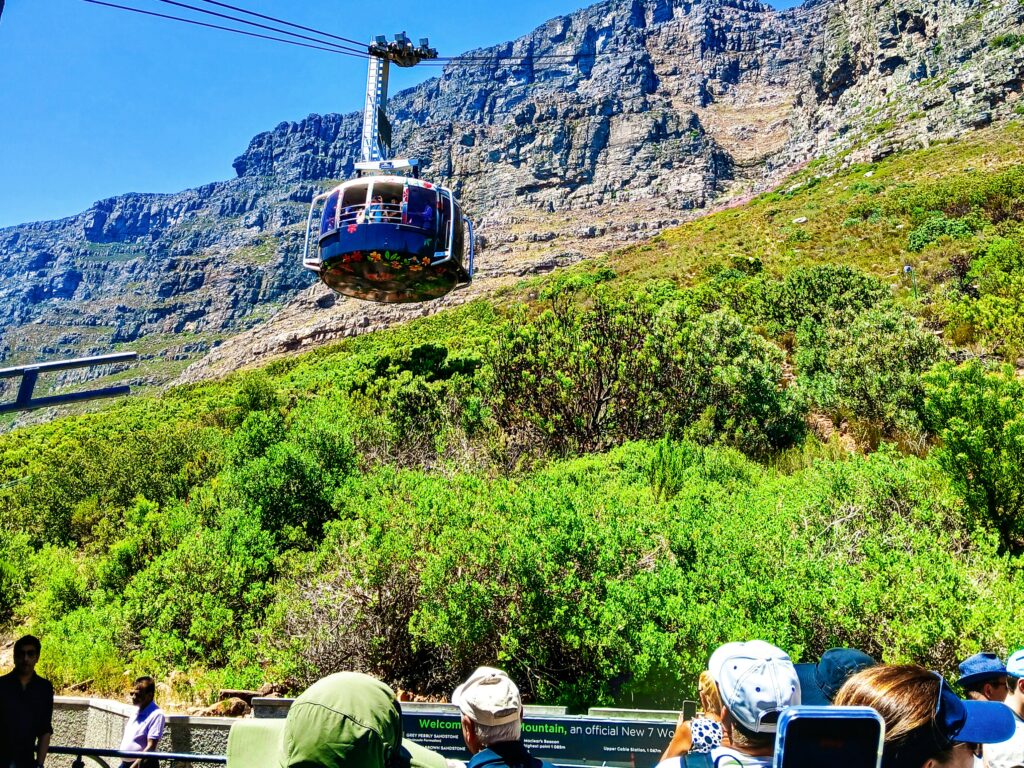
When visitors think of South African culture, Cape Town often comes first in global imagination. The city’s landscapes — the flat profile of Table Mountain, the Atlantic coastline, the vibrant waterfront, have become synonymous with an aesthetic notion of South Africa itself. Yet beyond scenic beauty lies a cultural infrastructure that has both historical depth and contemporary creative ambition.
Cape Town’s museums like Zeitz Museum of Contemporary Art Africa (MOCAA), festivals hosted in the shadows of the mountain ranges, and design districts serve as cultural anchors, linking tradition and innovation. Its galleries and heritage sites present the country’s art history alongside contemporary works that engage global audiences. The city’s designation as World Design Capital in 2014 and its reputation for cultural tourism reflect an institutional recognition of its creative industries and aesthetic influence. Cape Town’s art festivals, curated exhibitions, and design showcases continuously bring international observers and creators into dialogue with local culture.
What makes Cape Town’s cultural capital powerful is not only its artistic production but how it is packaged and shared with global audiences. It frames South Africa’s cultural output within an international context, making the city a hub for global conversations about African design, visual art, and creative innovation. Its international resonance, bolstered by tourism, arts institutions, and creative branding, positions Cape Town as a representational capital — where narratives about South African creativity are curated and communicated to the world.
Cape Town has the natural beauty and the provincial brain to curate that beauty in a specific way and put it out into the world. This is the strength of the Western Cape leaders. They made Cape Town the city of “What you see”.
Johannesburg: Urban Creativity, Multiplicity, Social Rhythms
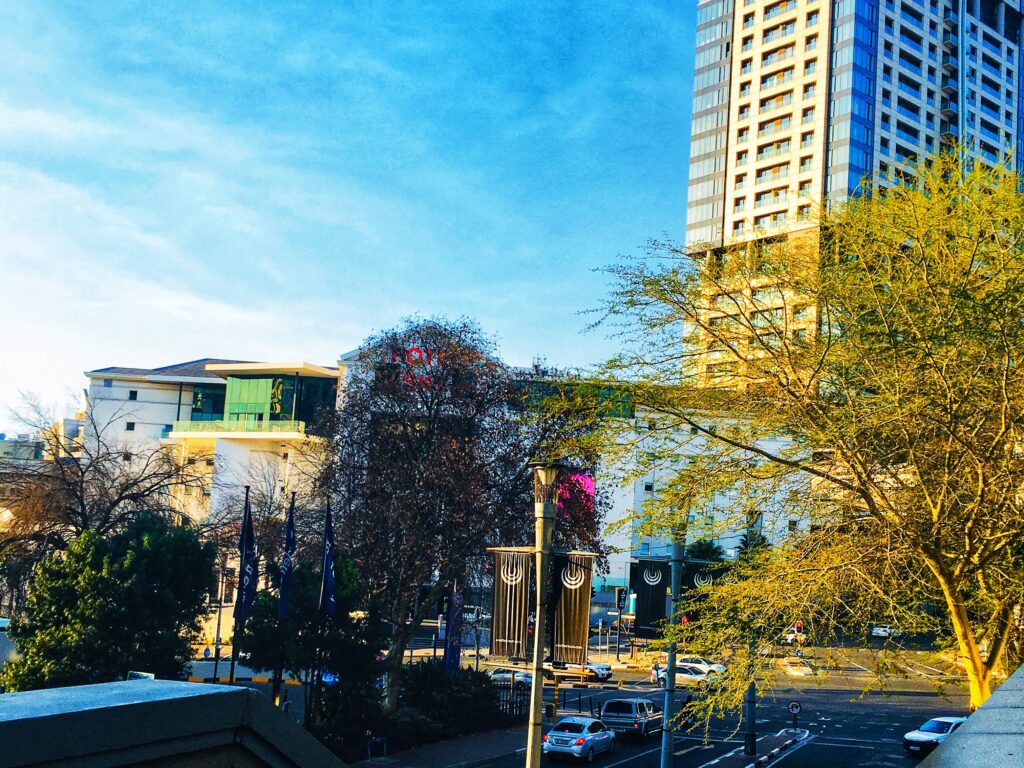
By contrast, Johannesburg is a city shaped by movement, migration, and metropolitan pluralism. Its cultural capital is rooted in lived experience, in the constant negotiation of space, identity, and voice. Johannesburg’s scene feels less curated and more emergent — a place where culture is produced in real time through performance, music, art, street life, and social exchange. This is where things happen. Johannesburg understands immediacy.
Johannesburg’s art galleries, precincts, and theatre spaces tell one story: the power of reclaimed urban spaces. Historic venues, like the Market Theatre — a site of anti‑apartheid cultural resistance, and art precincts like Maboneng and Stanley 44 reflect a city where creativity and social life are woven inseparably into its post-industrial fabric. Galleries are not just spaces for installation art but nodes of community engagement, where artists and audiences interact, debate, and co-create.
Music is another essential vein of Johannesburg’s cultural capital. The city’s rhythms from jazz to kwaito to amapiano and beyond, reflect the multiplicity of urban South African life. These genres are less static and more of lived experiences, broadcast in clubs, street corners, and township courtyards, making the city itself a continuously giving cultural landscape.
What Johannesburg claims is ongoing cultural production — the idea that culture is not just displayed but lived, contested, staged, and restaged in the spaces of everyday life. Its cultural capital comes from diversity, improvisation, and the energetic friction of urban creative exchange.
One thing about Johannesburg is that you have to be there. Life is not lived through flawless snaps to feed the eyes; you have to be part of what is happening, and that is how culture is lived. This is the city that accepts everyone and never questions if they belong because the city is open to the unusual and the never-before-seen.
Durban: A Literary and Multicultural Crossroads
Often overlooked in national cultural debates, Durban occupies a unique position that commands attention when one considers literature, performance, and multicultural heritage.
In 2017, Durban earned the distinction of becoming the first city on the African continent to be designated a UNESCO City of Literature, a recognition that situates it uniquely in global cultural geography. This status highlights Durban’s literary ecosystem — not only its festivals but its network of libraries, book fairs, and public literary activities that bring books and storytelling into public life.
Three major international literary festivals anchor this reputation: the Time of the Writer festival, Poetry Africa, and the ARTiculate Africa Book and Art Fair, all of which attract writers, poets, thinkers, and audiences from across the continent. These gatherings turn Durban into a site of literary dialogue, where language, narrative, and storytelling are central to urban culture — a cultural capital not just of art but of words and ideas.
Beyond literature, Durban’s cultural fabric is richly multicultural, shaped by Zulu, Indian, Afrikaans, and colonial histories. Its Indian Market (Victoria Street Market) and Zulu craft traditions demonstrate how cultural exchange and fusion live in everyday spaces and marketplaces, where food, art, music, and language converge.
Durban’s beachfront, with its live music performances, traditional dance displays, and vendors selling handcrafted beadwork and wood carvings, functions as a public cultural stage, showcasing the city’s social creativity as much as its production.
Durban’s cultural capital operates through crowd‑sourced, participatory culture, inviting both locals and visitors to engage with literature, performance, craft, and history in communal spaces. Its festivals are more than celebrations —they are conversations about identity and collective expression in a country full of countless identities.
In this triad, South Africa’s cultural capital is distributed, not centralized. Each city contributes uniquely to the nation’s cultural imagination, and together they represent a plurality of forms — heritage and innovation, performance and writing, identity and exchange.
What emerges from this is neither a competition nor a ranking, but a cultural geography — where Cape Town, Johannesburg, and Durban each serve as cultural capitals for different dimensions of South African creativity, storytelling, and meaning.
Instead of asking “who owns the cultural capital?”, the richer question is: which city’s cultural logic speaks to the future we want to live? For writers, Cape Town’s global platforms offer international accendibility; for performers, Johannesburg’s stages offer immediacy; and for storytellers and multicultural dialogue, Durban’s literary pulse offers deep roots and resonances across the continent.
Comments are closed