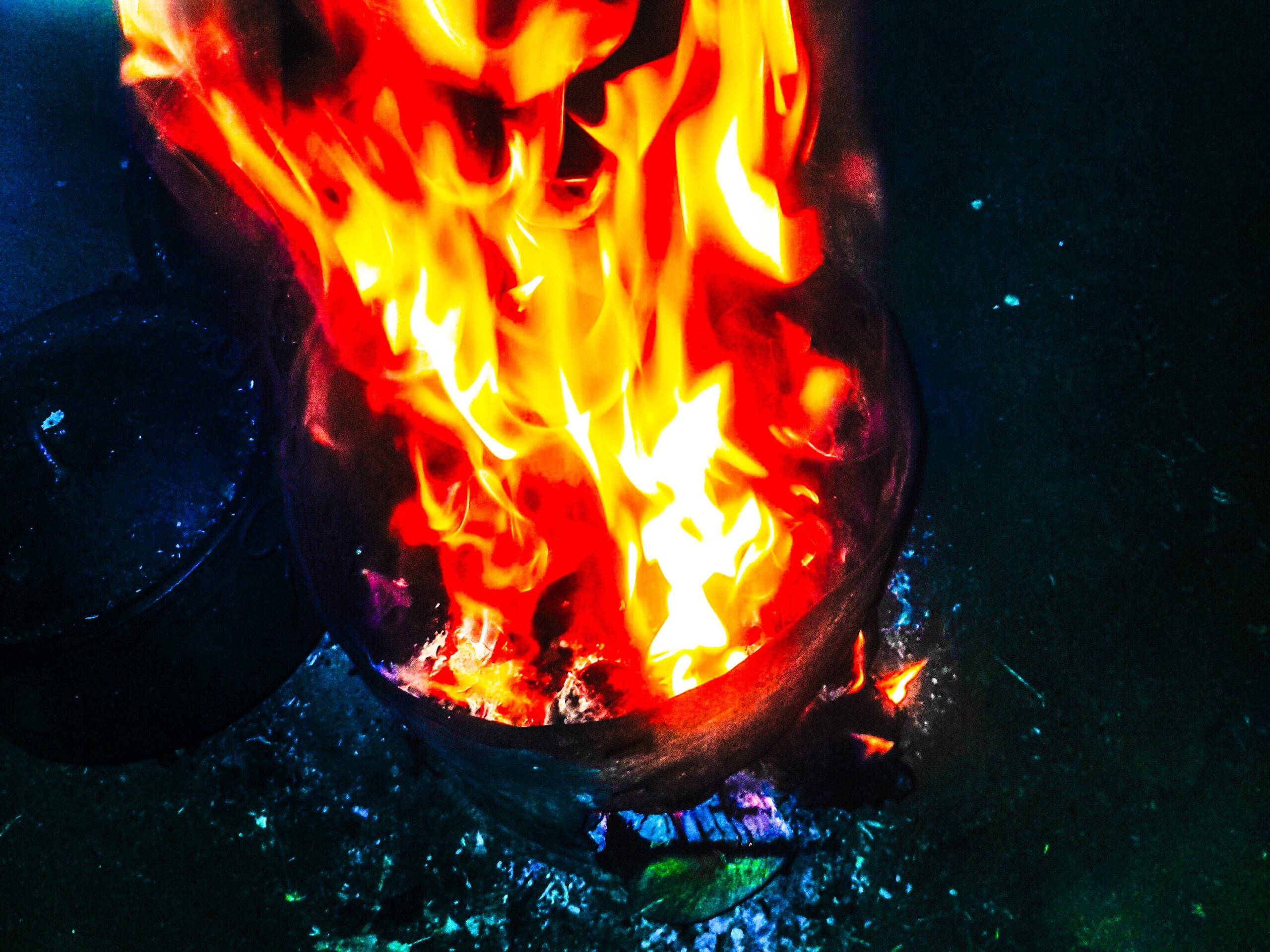
He woke when the infant sun slipped from the warm womb of the sky and went first to check the animals. Morning spread blue across the mountains, alive and endless. The land around him was silent and desolate, unblemished by cell-phone signal or human interruption.
He relieved himself beside the kraal, passing continuous water, stretched the stiffness from his limbs, then filled the kettle and set it over the wood fire. Soon, the water began shouting inside the metal. He poured it into two yellow enamel mugs, each holding a Five Roses teabag, and ate bread his father had brought from home the previous day.
Inside the little stone shelter, his father dressed in blue overalls, gumboots and a blanket wrapped around his shoulders. Their surrounding lay the practical inventory of shepherd life: bread and scones wrapped in newspapers, fresh meat still wet with blood, tins of baked beans and bully beef, blankets, ropes, and a washing basin. Outside waited two hundred and sixty sheep, seven donkeys, three dogs, and the mountains.
“We must finish the roofing today,” his father said, crawling through the low doorway onto his knees. “Tomorrow I’ll be on the road. We have to begin ploughing immediately. That rain last week was a sign.”
“Don’t you think it’s too early?” Sefako asked.
“Too early for ploughing?” His father laughed. “No. The heavens are open. Ramaseli has blessed us with an early spring rain. That’s what we were waiting for.” He tore bread into thick pieces. “Your sister bought seeds from the Free State. Says they’re the best you can find. I’m excited, son. Truly.”
“Will you manage with only Peete helping?”
“He’ll learn.” His father shrugged. “A man must eat from his sweat.”
They began roofing the shelter after breakfast. The sheep grazed lazily nearby while the dogs wandered between them. Because they had transported the grass on a donkey back from home, the work finished quicker than expected.
By late morning, the roof was done.
“I think you’re settled now,” his father said. “I should leave today instead of waiting until tomorrow.”
“At this hour?” Sefako frowned. “You won’t reach home before dark.”
“I’ll sleep at Selibeng if night catches me.” He brushed dust from his overalls. “I’ll be home by midday tomorrow.”
Then, as though remembering something important, he reached into the animal-skin wallet tied under his blanket and produced a folded two-hundred-maluti note.
“Your mother said I should give you this.”
Sefako stared at the money. “What am I supposed to buy out here? There isn’t even a shop.”
His father smiled. “I’m only the messenger. Perhaps you could give back to nature for invasion”
He said, climbing onto the horse, bidding him adieu.
“Stay vigilant, son.”
“Go well, Father.”
It was after eleven when his father evanesced over the ridge. Only then did the reality settle over him fully: two months alone in the mountains with sheep, donkeys, dogs, and the sound of silence. The nearest shepherd was seventeen kilometres away, and the nearest village almost forty.
That evening, he fetched water from the well and warmed some in a black five-litre tin over the fire. He had not washed properly in three days. Stripping naked under the wide evening sky, he scrubbed his face first, then his head, before lowering himself into the blue basin. He sang loudly while washing the dust from his rich, golden brown, hard legs and buttocks. Then the dogs erupted. Msuthu and Remi shot past him, barking furiously into the semi-darkness.
Sefako turned sharply.
A man stood a few metres away with a huge backpack slung over one shoulder and a camera hanging from his neck.
“Msuthu! Remi! Stop!”
The stranger stumbled backwards as the dogs circled him. Sefako leapt from the basin and pulled him upright before rushing to dress himself, water streaming down his body. That made him forget to put on petroleum jelly. Embarrassed, he soaked his thick woollen socks in the basin and pretended to wash them while the stranger repacked his bag.
Neither spoke for a while.
Then Sefako asked in Sesotho, “Who are you?”
The man blinked blankly.
“I said, who are you?”
Still nothing.
Finally, the stranger spoke, his voice rough with thirst.
“Can I have water?”
“What?”
“Water.”
It took Sefako a moment to understand the English word. Then he nodded quickly and filled one of the yellow enamel mugs.
The man drank greedily.
Sefako had turned eighteen in April. He had left school in Standard Six after failing the same year four times. Afterwards came initiation school, then herding. He was poor at writing, but his older sister—a teacher in a rural school near Thaba-Tseka—had taught him enough English to survive conversation.
He knew phrases like: “My name is, where are you from, and how are you.”
If foreigners spoke slowly, he could follow.
“Another one, please,” the stranger said, clearer this time.
Sefako refilled the mug.
“Thank you.” The man wiped his mouth with the back of his hand. “My name is George.”
“And what—what doing here? You?” he was nervous to speak English after a long time.
“I’m taking photographs.”
“Pictures?” Sefako asked with surprise.
George nodded. “Nature, mountains, animals, shepherds.”
“Why?”
George smiled faintly.
“It’s my job. But right now I’m raising money for an organisation here in Lesotho.”
“Raising money?”
“I sell the photographs in New York,” George explained. “The money helps buy storybooks for children in rural villages. Books in Sesotho and English.”
At this, Sefako grew quiet.
“My sister taught me reading,” he said. “At school, they thought I was stupid. My teacher used to call me the headquarters of the domkop.” He laughed once, without humour. “I left after I punctured her Corolla tyres.”
George smiled despite himself.
“But my sister taught me at night. Me and my brother. That’s how I learned.”
Darkness descended over the mountains. And George asked if he could bathe. While Sefako checked the animals, George washed himself in the same blue basin beneath the cold and open sky of Lesotho.
***
Dinner was bread and beef. Afterwards, they fried maize in an old tin pan over the fire and sat under a blanket of stars. The flames rose high, though not high enough to defeat the cold deployed by the mountains. Spring had already landed, but the mountains still possessed winter in their respiration after sunset.
“So why are you here alone?” George asked as the maize burst loudly in the pan like distant gunshots.
Sefako laughed.
“You should ask yourself that question first.”
“But I already told you. I’m taking photographs.”
Sefako turned the maize with his hand.
“You mean you leave your home, come to foreign place, take pictures for children you don’t know?”
George smiled.
“Yes. Something like that.”
For a while he watched the fire.
Then he shifted his posture, placing a careless hand on the hot pan and snatching it away immediately. Sefako laughed openly this time.
“My name is George Rowling,” he said. “My father is Louis Rowling. He works at a bank in London.”
“A bank?”
“A place where people keep money.”
Sefako nodded.
“My great-grandfather started the bank. It stayed in the family. My father runs it now.” He searched for a comparison Sefako might understand. “Like… if your father leaves you his animals one day. Then you leave them for your children.”
“Ah.”
“My mother lives in New York. She edits a financial magazine there.”
“What is New York?”
George blinked.
“It’s… a city in America.”
“Like Maseru?”
George smiled. “Much bigger than Maseru.”
“And London?”
“The same. A big city.”
Sefako shook his head as though trying to imagine something impossible.
“You said your mother lives there. But you said your father is in London.”
“They divorced.”
Sefako frowned immediately.
George realised he would have to explain.
“They are no longer married. My father married someone else. My mother married someone else, too.”
Sefako stared at him with genuine confusion.
“How is that possible?”
“You don’t have divorce here?”
“People marry again after death,” Sefako said. “Like my uncle after his wife died. But not while both people are alive.”
George poked the fire thoughtfully.
“What if the husband cheats?”
Sefako shrugged.
“It happens.”
“And the wife stays?”
“Usually.”
George looked astonished.
“In England, that would destroy a marriage.”
“Here,” Sefako said, “the woman who sleeps with the husband is hated more than the husband himself. She becomes nyatsi.” He spoke the Sesotho word with contempt. “But many men have more than one wife anyway, so cheating is not shocking.”
George let out a low whistle.
“Does your father have many wives?”
“No.”
“My father cheated on my mother with a woman from the bank,” George said. “That’s why she left him.”
There was silence again, as the maize crackled between them, detached.
“You said you live in New York,” Sefako said eventually. “Why not London?”
“I have a flat in Belgravia, London. My father bought it for me. And I have an apartment in Manhattan, New York. My mother bought that one.”
Sefako stared at him.
“You have two houses?”
“Yes.”
“In two countries?”
“Yes.”
Sefako laughed in disbelief.
“I have never met someone from outside Lesotho before. Not even South Africa.” He shook his head. “I used to think places like London and New York were stories educated people tell.”
George smiled.
“What are they like?”
George leaned back, considering.
“New York is loud, fast, full of people from everywhere. London is quieter, older. London feels more like home.”
“My sister wants to study in London one day,” Sefako said. “Or Australia. She loves books.” There was pride in his voice now. “My father pays for everything without complaint. He’s proud of her.”
“And your brother?”
“My younger brother wants to become a doctor.”
“So, you have two siblings?”
Sefako withheld speech for so long that George thought he had decided not to answer.
“My older brother is in prison.”
George looked at him.
“He killed his wife.”
The fire shifted between them, and Somewhere in the darkness, a sheep bell rang.
“Do you have brothers?” Sefako asked suddenly.
“One older brother. He works with my father at the bank. He has a wife and two children.”
Sefako nodded.
Then George asked, “How did your brother kill his wife?”
Sefako stared into the flames.
“The city happened to him.”
George said nothing.
“My father wanted him to work with animals. Wool and mohair make good money here. But my brother wanted city life: clubs, beer and girls.” He picked at the edge of the frying pan. “He stole money from my father and left for Maseru.”
The mountains had gone completely dark now.
“He married a woman after knowing her only two weeks. They drank every day. Neither worked.”
He paused.
“One afternoon, a brewery truck crashed near their neighbourhood. People rushed there to steal alcohol from the road.” He swallowed. “His wife went too.”
George listened.
“She came home after sunset, drunk. My brother was already there.” Sefako’s voice flattened strangely now, emptied of emotion. “He beat her with a metal rod.”
The fire cracked sharply.
“She died there.”
George stared into the darkness.
“My God.”
“People said her body…” Sefako stopped himself. “It was bad.”
For a while, neither spoke.
Then George asked, “And you? Why did you become a shepherd?”
Sefako smiled before he answered.
“Because books defeated me.”
George laughed, unaware.
“No. Really, I’m not as bright as my sister or my younger brother.”
“I had three choices after school,” Sefako said. “Factories in Maseru or Maputsoe. Illegal mining work in South Africa, or animals.”
“The factories are terrible?”
“The Chinese are arseholes. They treat people like shit. Like you are an illegal foreigner in your own country. And they pay you nothing. Long hours and small money. Our former Prime Minister once said the payment was more than enough for people who do nothing but pass pieces of textiles throughout the day. Those Chemicals from textiles make people sick. They cough ceaselessly, and that is a pavement to the grave.” He shook his head.
“And I’m not strong enough to face what happens in the mines in South Africa. A boy only one year older than me died two weeks ago after going to the mines in Gauteng.”
George watched him once more.
“So, you chose this.”
“Yes.” Sefako looked out into the darkness where the sheep slept. “Out here, I am safe. Even if I am alone.”
He smiled.
“I want to become good with animals like my father. Maybe even richer than him. Sometimes his sheep give birth to three lambs, and all survive.” He laughed. “People say he’s a witch because of his luck.”
“And then?” George asked.
Sefako shrugged.
“I’ll marry. Maybe two wives.”
George laughed.
“And you?” Sefako asked suddenly. “Do you have a wife?”
George looked into the fire for a long moment before answering.
“No.”
There was silence again between them before Sefako had his eyes fixated on George.
“Why do you have those things buried under your skin?” Sefako asked suddenly, pointing at the tattoos running along George’s forearm. “People here call you a satanist if you have them.”
George laughed.
“A satanist?”
“Yes. Or somebody fresh out of prison.”
That made George laugh harder.
“No,” he said, still smiling. “I like art. Tattoos are art to me.” He rolled down his sleeve slightly, studying the faded black ink in the firelight. “Most of them mean something personal.”
Sefako shook his head in amusement.
“In the taxi from Thaba-Tseka, there was a man with tattoos all over his neck.” He grinned at the memory. “The women started praying at once. They thought he was a satanist coming to make the taxi crash.”
George burst into laughter.
“What happened?”
“Nothing. The poor man was visiting his parents from Gauteng.”
The fire snapped between them.
The laughter between them dissolved into stillness and yawning. Beyond the fire, the mountains stood black, muted and infinite now, and the sheep shifted gently in their sleep. Then, without another word, the two men disappeared into the small stone shelter while the cold roamed through the night outside.
***
George was a twenty-three-year-old, perfect, healthy Englishman, with medium-brown hair, pale blue eyes that looked almost silver in certain light, a symmetrical nose and pearly teeth. He had been born into wealth in Chelsea and educated all his life, first at private schools, then at the University of the Arts in London, where he had studied photography before eventually moving to New York to expand his artistry.
Two years earlier, he had visited Lesotho for the first time. Something about the mountains, the shepherds, and the children holding torn schoolbooks unsettled him in ways he still struggled to explain to himself. Afterwards, he started a small initiative to raise money to buy storybooks for rural primary schools and preschools across the country. At first, his parents had assumed it was another temporary obsession of a rich young man searching for moral texture in foreign places. But George kept returning.
***
Eight twenty-six glowed on George’s running watch, yet he was still buried deep in sleep. What finally pulled the Englishman back into the world was not the bells around the sheep’s necks, but Sefako’s morning singing. His tenor travelled across the mountains with startling force, rising and falling through the cold blue air like church music carried by wind.
By the time George emerged from the little stone shelter, blinking against the daylight, Sefako had already eaten breakfast. The tea waiting for George in the yellow enamel mug had gone cold beside the fire. Outside, Sefako stood among the flock feeding salt to the sheep while the dogs circled him. George remained at the doorway for a moment in nothing but black underwear and a white sleeping shirt, staring at the mountains as though he had woken inside a dream.
“This is heaven,” he murmured to himself with his eyes thrown straight into the inescapable view before him. The flock was so large that Sefako seemed almost consumed by it. George found the mug near the ashes and drank the cold tea anyway before dressing in military-green, six-pocket shorts and training shoes.
“Good morning,” he called, walking towards him.
Sefako looked up with amusement.
“Do you always wake when the sun is already above your head?”
“Most days, yes.”
“Did you eat?”
“I had tea.” George paused. “Do you have coffee?”
“Coffee?” Sefako frowned. “What is coffee?”
George laughed. “Never mind.”
A moment later, he shifted awkwardly.
“I need to wee. Where do I do it?”
“Do what?”
George mimed unzipping his trousers.
“Oh.” Sefako pointed towards the kraal. “There.”
When George returned, Sefako was leaning against a rock watching the sheep spread across the grassland.
“So,” he said, “are you ready for your mission today?”
“My mission?”
“Taking pictures.”
George smiled.
“Actually, I was thinking of taking a day off. My back and feet are sore from walking.”
“A day off?” Sefako repeated slowly, amused by the concept. “What is that? A New York thing?”
George laughed loudly.
“Maybe.”
“How long were you walking?”
“Days.”
Sefako shook his head.
“You people from overseas suffer voluntarily. You see, I am here because the animals have to give crops and pastures back home some time to grow.”
George grinned, understanding Sefako’s isolation.
“Perhaps I could stay with you today instead. You can teach me about shepherding.”
“There’s enough grass here for the week,” Sefako said. “The animals won’t need moving yet.”
***
The day grew old around them. Sefako explained the habits of sheep, the moods of weather, the dangers of jackals, and the small politics of village life. The best story was about his younger brother, Peete. He once got dressed for school in such a rush that his penis ended up caught by a zipper and injured while zipping up. In his panic and pain, he ran out into the village half-dressed, crying and shouting, while people began to chase after him, thinking something far worse had happened. They caught him after nearly an hour. At first, there was confusion, then laughter, then concern. The older men took him back home, scolding him gently all the way, while the women shook their heads and sent for water and cloths.
By the time he reached home, the whole village already knew. And for weeks afterwards, Peete could not look anyone in the eye without the story following him before he even spoke.
George photographed almost everything: the flock, the mountains, the dogs asleep in the grass, smoke rising from the fire, and Sefako himself moving through the animals with command. And, in return, he taught Sefako how the camera worked. Sefako learned quickly. The thing that impressed George most was the birds. Before a bird even appeared, Sefako could identify it purely from its cry.
“There,” he would say suddenly.
George would hear nothing at first.
Then the sound would emerge faintly from the cliffs or sky.
“That is…”
Sefako would name it in Sesotho before describing its colours and shape so precisely that George always found it eventually through the lens. By late afternoon, George had photographed rockjumpers, siskins, bald ibises, grey tits, and yellow-breasted pipits. When evening approached, the weather changed violently. The bright blue sky was overshadowed by heavy dark clouds. The cold no longer crept around them; it turned up fully awake and merciless. George sat wrapped tightly inside Sefako’s thick blanket, shivering beside the fire while Sefako crouched nearby, building the flames higher.
“I didn’t expect it to turn this cold,” George said through chattering teeth. “Do you ever get used to it?”
Sefako shook his head.
“You don’t get used to cold. You only survive it.”
They ate roasted mutton and bread while the wind moved angrily through the mountains. After supper, George vanished fleetingly into the shelter and returned with a bottle of Jameson whiskey in hand.
“The first time I came here was in July,” he said. “I swore I would never return. There was snow everywhere. I thought I was dying.”
Sefako laughed.
“But the mountains kept calling me back,” George continued. “And the people’s friendly faces and hospitality.”
He held up the bottle.
“So, I brought this.”
“Alcohol to fight cold?”
“In Ireland, people drink whiskey through winter.”
“Does it work?”
“Only emotionally.”
Sefako fetched the two yellow enamel mugs, and George poured generously into both.
Sefako tasted it cautiously.
His eyes widened.
“I’ve never had alcohol before.”
“Seriously?”
“In the village, people drink ’Mamotsatsa.” He grimaced. “That thing can age a man seventy-five years in one month. Even their skin stops accepting Vaseline.”
George burst into laughter.
“You can always recognise them,” Sefako continued. “Their faces collapse before their time. My grandfather was one of them. The skin becomes soil while they are still above the ground.”
“And that’s the only alcohol here?”
“There’s Maluti and Black Label. Mostly for mine workers and men returning from Gauteng trying to show they’ve become important.”
“My father drinks whiskey every night,” George said. “So does my mother.”
By then, the whiskey had warmed them enough that neither noticed the maize blackening forgotten in the pan over the flames. Only the smell finally betrayed it.
Sefako laughed first.
“You see? Your Irish medicine is dangerous.”
The cold deepened outside.
We are sharing blankets its cold. George said, inside the shelter. But that was not the only thing they shared. They pressed their bodies together like a finger on a knob handle and rode off in the dead of the night. And for a moment, they forgot they were in an open space in the highlands of Lesotho where cold resided like the devil in the pit of hell.
***
One by one, the days began to resemble each other. And yet neither of them grew tired of it. They were gorgeous, electrified, simple days. George had long forgotten that he was supposed to stay one night before continuing his photography journey across the mountains. The mornings belonged to the sheep and the dogs; the afternoons to wandering conversations; the evenings to firelight, stories, and the cold breathing around the shelter.
Sefako taught George how to ride a horse. George admitted that his father owned three horses in Chelsea, though he himself had never cared much for riding as a child. His brother, however, competed professionally when he was younger, and his father still spoke about horses with near-religious admiration.
“You, opportunity waster,” Sefako teased him.
“I know,” George replied, laughing as the horse nearly threw him sideways.
Reciprocally, George helped Sefako with English.
They practised each evening beside the fire: new words, short sentences, small pieces of writing. To George’s surprise, Sefako enjoyed storytelling once he stopped fearing mistakes. Soon, they moved through the mountains with the ease of people who no longer needed permission to exist beside one another. They rested on grassy embankments while the sheep grazed nearby, speaking little sometimes, simply listening to the wind howling through the hills. One afternoon, while lying beside each other in the grass, Sefako spoke without looking at him.
“When I was young,” he said, “there was a boy in the village. My friend.” He paused. “I used to feel something strange when I was around him.”
George stayed silent.
“At first, I thought all boys felt that way. But it never stopped.”
“In the village,” Sefako continued, “a boy like that is called stabane.”
He spoke the word, almost fearfully.
“And that is considered a terrible thing.”
George turned towards him.
“What happens to a boy like that?”
“He is forced to become a man, unequivocally. Initiation school, then marriage.” He gave a faint shrug. “People say those feelings belong to Europeans. Not Africans.”
George looked at him for a long moment before speaking.
“When I was at university, I told my parents about myself.”
Sefako glanced at him.
“They accepted it?”
“Yes.”
George smiled, though there was sadness underneath.
“I had a boyfriend in New York for three years.”
“What happened?”
“He cheated on me,” George said simply. “More than once. Eventually, he asked for an open relationship.”
And that is?
When people in a relationship see other people.
“Ah, it truly is the land of the free when you come from. Sefako jeered him. So, you left him.”
“Yes.”
For a while, they listened only to the bells around the sheep.
***
When September drifted into October, snow showed up unexpectedly across the mountains like a thief in the night, and remained for four days. George became almost childishly excited. He photographed everything: the white valleys, the animals moving through snow, the dark blue mountains disappearing into mist, and Sefako wrapped in a blanket and gumboots like something carved from the landscape. By then, George had adapted to the highlands. He wore gumboots himself now and walked with increasing confidence through the rough terrain.
One afternoon subsequent to the snowy days, Sefako’s father arrived unpredictably with food supplies. The old man stared at George in disbelief. His son had somehow transformed a wealthy Englishman from New York into something dangerously close to a full-time shepherd. He stayed only one night before preparing to leave again the following morning. George realised then how much time had passed. More than a month. His parents, friends, and art collectors had heard almost nothing from him. The following morning, he decided to leave with Sefako’s father and return to civilisation. He would catch a taxi from the village to Thaba Tseka, then Maseru.
George said goodbye, but Sefako did not answer. Instead, he turned back towards the flock and continued walking. George watched him for several moments before climbing onto the horse. The journey away from the mountains felt unbearable nearly instantly. Behind them, Sefako stood alone among the sheep until both horse and riders disappeared from the familiar path. Only then did he feel it fully: a lassitude inside his chest so sharp it mimicked illness. His eyes burned, though no tears fell.
For three days, the mountains sensed emptied of sound. Then one evening, returning with the flock at dusk, Sefako saw a horse standing outside the shelter. His heart lurched. He rushed inside. George was sitting beside the fire.
“The past three days have been impossible,” George confessed before Sefako could even speak. “I borrowed your father’s horse from the village after contacting everyone.”
Sefako stared at him in disbelief.
“They thought I was dead,” George said, laughing. “My mother nearly involved the American embassy and British High Commission.”
Despite himself, Sefako smiled.
“You learned the road quickly.”
“I had a good teacher.”
Then George grew serious.
“I’ve been thinking.”
Sefako waited.
“You return home in three weeks.” George hesitated momentarily. “Come to New York with me.”
Sefako laughed out of shock.
“New York?”
“Yes.”
“You have gone mad from riding too long in cold weather.”
“I’m serious.”
Sefako’s laughter faded.
“What about my work?”
“Your father can find another shepherd temporarily.”
Sefako said nothing.
The idea itself felt chimeric—like something heard in stories told by actors in foreign movies. New York. America. The names alone sounded too large for his mouth. Yet that night, long after George had fallen asleep beside the fire, Sefako remained awake listening to the wind outside and imagining a city he had once believed existed only in books that he could not afford to read. How could an Englishman abandon his comforts and ride in the cold back to a Shepard to ask him to move with him in New York?
***
They woke in the dead of night to lead the flock back home through the cold, moving as shadows between sleeping mountains, once the duty had been successfully fulfilled. His father could not join them, held back by ploughing obligations in the village.
Two days after they returned, George helped Sefako complete the visa application online and booked first-class tickets. Together they travelled to Maseru for the embassy interview, passing through bright, quiet, high-ceiling rooms that felt far removed from the world they had come from.
When it was over, there was nothing dramatic left to say. Only the slow realisation that something had already changed. And then, as if the mountains had simply graced and released them, they were gone—on their way to New York City.
Comments are closed